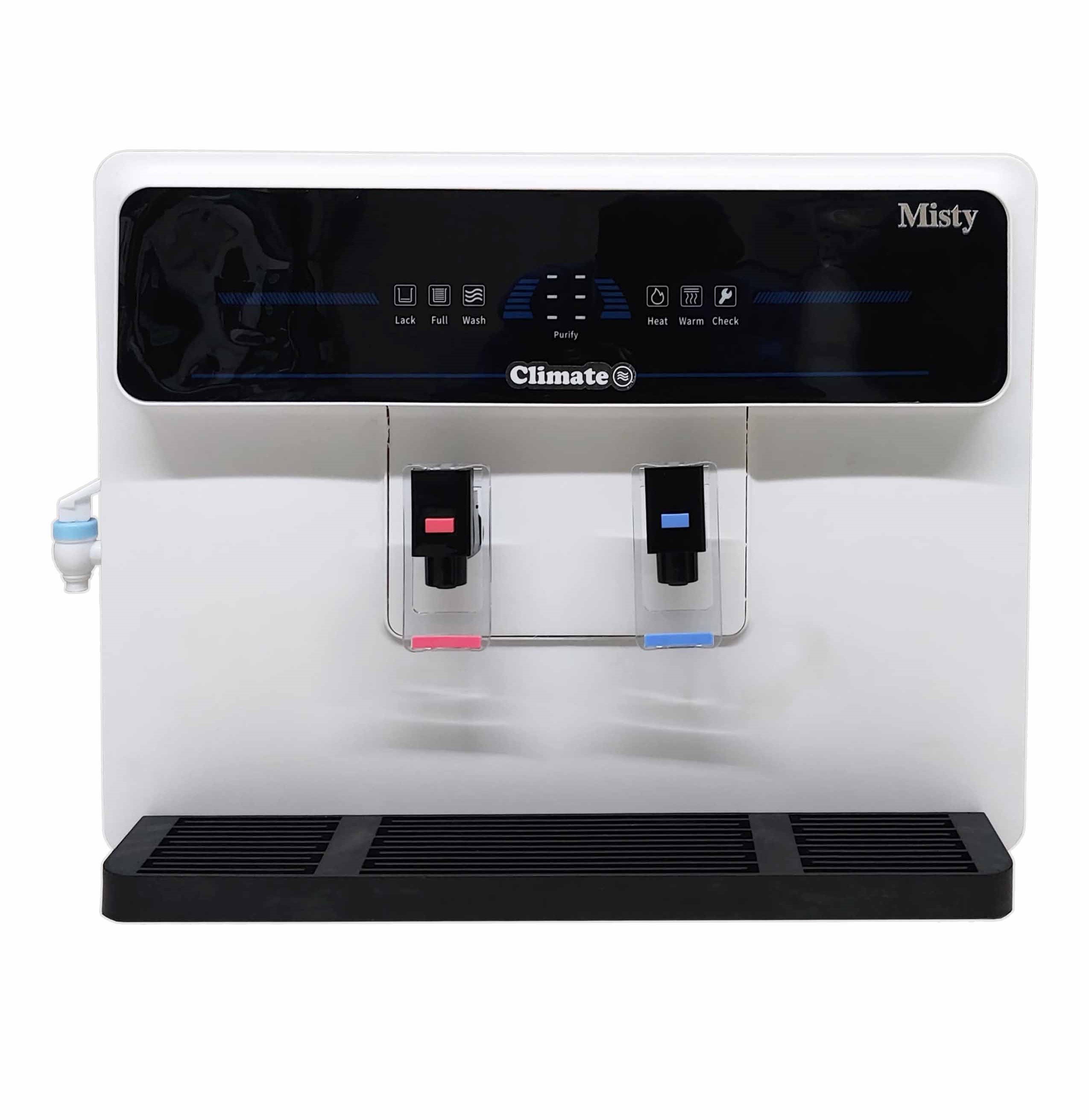
Product Name
CLIMATE (NORMAL + HOT)
Price
16499.00
Description
Climate Normals" represent 30-year averages of weather variables (temperature, precipitation, etc.), serving as a baseline to compare current weather with expected conditions. In the context of a "Normal + Hot" scenario (e.g., in a 1991–2020 dataset), this describes a baseline that is generally warm or warming, with an increased frequency of high-temperature days
Specifications
MODEL CLIMATE (NORMAL + HOT) APPLICATION SUITABLE FOR BRACKISH WATER FILTER LIFE APPROX 3000 LITRE / 6 MONTHS FILTERS 10"SEDIMENT, 10"GAC, 10"CTO, 10" SEDIMENT INPUT VOLTAGE 100-300 VOLT AC (50Hz) INSTALLATION COUNTER TOP MAX.OPERATION TDS < 3000 PPM MEMBRANE TYPE THIN FILM COMPOSITE MIN.INLET PRESSURE / TEMP 0.3 kg / cm2, 10 °C OPERATING VOLTAGE 24 VOLT (DC) PURIFICATION CAPACITY 12 LITRES PER HOUR RECOVERY RATE MORE THAN 40% AT 27°c ± 2°c STORAGE CAPACITY 3 LITER HOT WATER CAPACITY 800 ml PRODUCT DIMENSION 435 (H) x 215 (W) x 565 (L) mm PACKING SIZE 480 (H) x 315 (W) x 640 (L) mm TECHNOLOGY REVERSE OSMOSIS SYSTEM TOTAL POWER CONSUMPTION 50 W TUBE 5 METERS SYSTEM WEIGHT ONLY 9.5 Kg (Approx.) Country of Origin INDIA
Benefits
Accurate Planning for Infrastructure: Utilities and energy companies use these metrics to project electricity demand for air conditioning and plan energy distribution.Drought and Water Management: Accurate normal data allows water managers to determine if a period is truly in a drought state compared to the modern, warmer baseline.Agricultural Adaptation: Farmers use updated normals to determine the new first/last freeze dates, allowing them to shift planting schedules to match a longer, warmer growing season.
Features
30-Year Averaging Period: The latest standards are based on 1991-2020 data, which is updated every 10 years to reflect shifting, warmer trends.Rising Temperatures: Modern normals (e.g., 1991–2020) show significant warming compared to previous 30-year periods (e.g., 1981–2010), with 2024 being noted as the warmest year on record.Higher Thresholds for Extremes: Due to the increased baseline, the threshold for what is considered an "extremely hot" day is often adjusted upward, though the overall frequency of hot days is increasing.